
Planning for the Peak, Not the Average
By April 2026, Meta had put up eight fabric-and-aluminum tent structures at its Prometheus campus in New Albany, Ohio, in the nine months since ground broke. The five permanent buildings that preceded them on that same campus had taken two to three years each. The tents were not a shortcut. They were the answer to a question the industry had stopped being able to answer with its old playbook, which was how to stand up a gigawatt of compute on a schedule that assumes you can find, hire, and hold every specialist you will need for the middle nine months of the build.
The tents are one visible shape of a broader move. Hyperscalers have shifted toward prefabricated modules and campus-scale sequencing precisely because the labor market cannot be scaled linearly with the schedule. There are only so many controls engineers and commissioning agents in the country, and every hyperscaler campus, every semiconductor fab, every advanced pharmaceutical plant, and every aerospace rate ramp is competing for the same short list of names. The winning move is not to hire faster than the market can supply. It is to design a system where the peak is covered by someone else’s payroll and released back to the market when the peak passes — and that system rarely exists by accident. It gets built, deliberately, before it is needed.
The Shape of the Peak
Most capital programs do not need the same headcount from month one to month thirty-six. The demand curve has a shoulder, a peak, and a tail. The shoulder is planning and mobilization. The peak is the middle of construction and the run into commissioning, where trades stack up, controls come alive, quality escapes get expensive, and a closeout organization has to appear as if from nowhere. The tail is punch, warranty, and the first months of operation.
Staffed for the peak, the organization carries roughly twice the payroll it needs on either side of the curve. Staffed for the average, it misses the peak — and missing the peak on an industrial project is not the same as being slightly late. It shows up as commissioning windows that slip past the utility interconnection date, controls specialists who arrive four weeks after the equipment is energized, and quality issues that compound because there was no one senior enough to catch them the first time. PwC’s 2026 aerospace and defense readiness survey found that at two times current production rates, executive confidence in on-time delivery fell by nearly half; by three to four times, a third of the industrial base said it could not deliver on any timeline. The bench is the constraint, not the order book.
The response most organizations reach for first is to hire. The response that actually works is to design a system where the peak is met by a network the operator has pre-built, pre-qualified, and can mobilize inside a defined window. Everything downstream of that decision — contracts, onboarding, tooling, systems access, safety qualification — either supports it or gets in its way.
The Difference Between “Yes” and “Ready”
Every operator running a serious capital program has a stack of framework agreements. Master services agreements with the big engineering firms. On-call orders with staffing partners. Preferred-vendor lists that get reviewed once a year and cited in every kickoff deck. On the surface, this looks like a surge network. It is not. It is a set of relationships that will say yes when called. Saying yes is not the same as being ready.
Ready means a named specialist has already been background-checked, safety-oriented, tooled, and cleared to site standards, and that the paperwork that would otherwise consume the first three weeks has been done in advance. It means the operator’s scheduling system, permit-to-work platform, and quality module have the specialist’s credentials loaded, and the partner firm can pull a person off a bench and put them on a badge on Monday. It means the scope — and the handoff to the operator’s own team — is written down before the call goes out, not negotiated in the first stand-up.
The gap between the two is measured in weeks, and weeks are the whole game in a peak. A commissioning specialist who is on-site and productive in five days behaves differently in the plan than one who takes four weeks to onboard. The first can be pulled in for a two-week peak on a single system and released. The second is functionally a hire, because the cost of getting them productive is only worth it over a longer window. The ready network buys optionality; the framework agreement alone buys a phone list.
Specialty Coverage Is Not Generic
The general contractor market is deep. The specialty market is not. Commissioning agents, controls engineers, safety leads on high-hazard systems, closeout managers who can drive a punch list to zero, AS9100 quality specialists, low-observable coatings technicians — these are roles where the entire national pool is measured in the hundreds or low thousands. One recent analysis of the Fort Worth aerospace market noted that only an estimated 400 to 500 nationally certified low-observable coatings technicians exist in the country. The AIA’s member survey reported that 76 percent of aerospace organizations struggle to hire engineering talent and 56 percent struggle to source skilled trades. The math does not permit every operator to hold enough of these people on its own payroll.
What works is a partner ecosystem where the specialty pool is shared, pre-qualified, and callable. Agreements with two or three firms per specialty rather than one, so a peak that lands during another operator’s peak does not leave the calling operator stranded. Visibility into the partner’s bench — who is coming off which project, when — so mobilizations are planned against actual availability rather than a promise. Specialty scope defined tightly enough that the specialist is not asked to also fill in as a generalist, which is where retention breaks and the partner starts declining calls.
Retention on the partner side is a design variable, not an accident. The firms that hold their best specialists are the ones with a portfolio of calls that keep those people working across peaks. An operator that treats a partner as a one-project vendor rarely gets the A team the second time. Operators that treat two or three partners as an extended bench — a share of the work, a rhythm of calls, enough visibility to plan their own hiring — get the A team consistently, because the partner can afford to hold it between peaks.
Modules, Not Just People
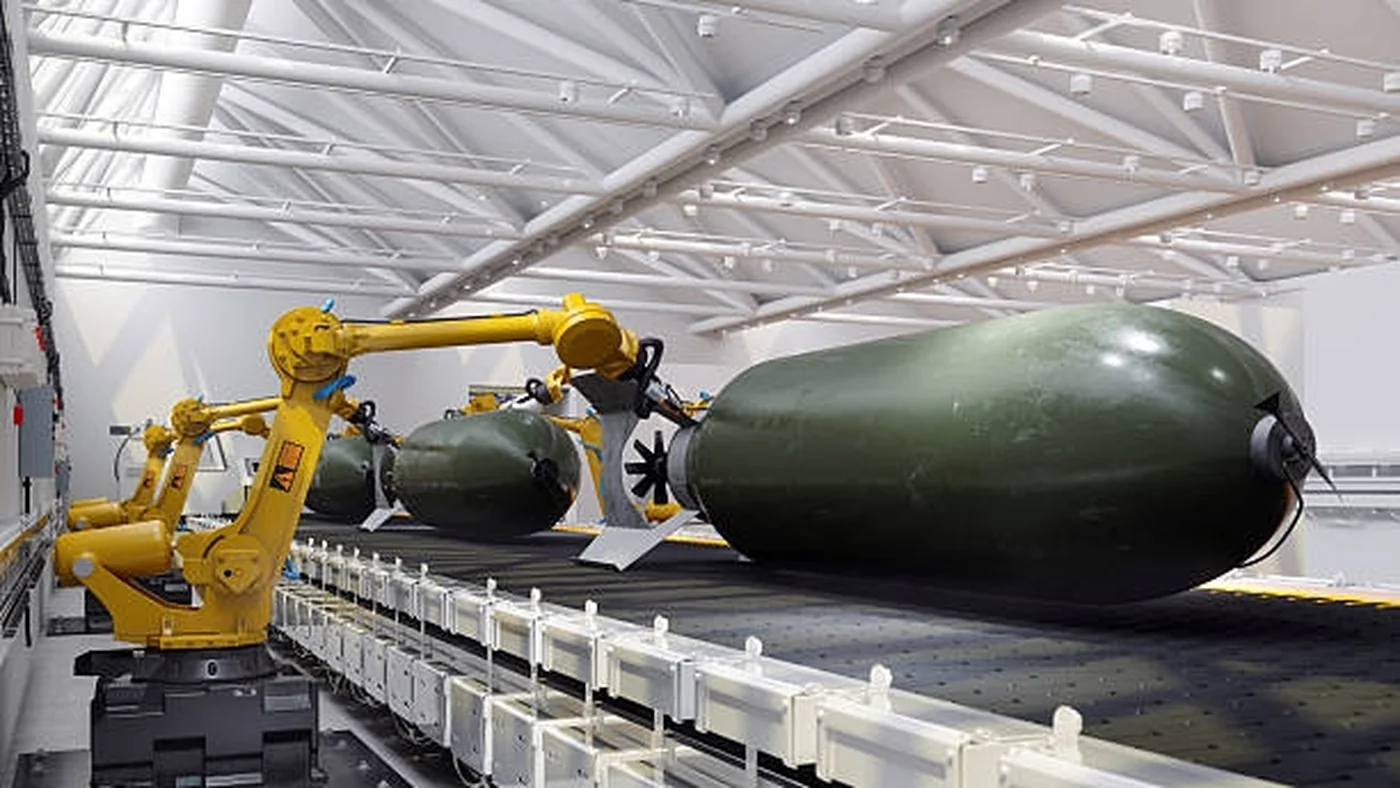
The Prometheus tents work because Meta shifted work out of the peak window and into a factory. Aluminum framing, fabric envelope, prefabricated power and cooling skids — the peak on site is what remains after the parts that could be built elsewhere have been built elsewhere. Meta’s mass timber pilots on other data-center builds cited the reduction in on-site steel welding — the specialty most exposed to the trade shortage — as one of the drivers of shorter build windows. Other hyperscaler campuses that have gone operational ahead of aggressive schedules tend to be running the same playbook.
The pattern generalizes past data centers. Any pre-engineered module, packaged system, or off-site build that moves work from the peak to a factory reduces the specialty labor the peak has to absorb. A commissioning strategy that qualifies at the factory rather than only in the field reduces the on-site commissioning peak. A quality system that runs on the supplier’s floor reduces the number of quality specialists the operator has to surge in during startup. The peak that never enters the schedule is the cheapest peak to cover.
The partner ecosystem and the module strategy have to be designed together. A fabricator that can hold a schedule but does not participate in the operator’s quality and commissioning systems shifts the peak downstream rather than eliminating it. The operators getting real time out of modularization are the ones that pulled the fabricator, the commissioning agent, the controls integrator, and the owner’s engineer into the same standards early — so a module arrives on site with its factory acceptance test and handoff package intact, and the site team is releasing systems for use rather than reworking what showed up.
Mobilization And Release
The mechanics of getting a surge team to site inside the window are unglamorous and mostly non-technical. Contracts open, priced, and signed before the call goes out. A single onboarding path that treats a partner specialist the same as an internal one, with credentials that load without a week of coordination. A named badge sponsor on the operator side who owns the specialist’s first day. A defined scope of what the specialist is on the hook for — and, more importantly, what they are not.
Textron Aviation’s public account of its post-pandemic ramp toward roughly 200 jets a year offers a useful counter-image. Half of the workforce had less than five years of experience, up from under 30 percent in 2019. The CEO named “out-of-station work” — the aerospace cousin of traveled work — as particularly hard on newer employees, because it depends on workarounds only seasoned people know how to run. When the peak arrives and the network in place is a stack of new hires rather than a pre-qualified pool of seasoned specialists, the peak gets covered by putting less-experienced people on harder work. The output shows up in defects, rework, and schedule variance, all of which cost more than the payroll they were trying to avoid.
Mobilization also has to release. A network that surges people in but has no exit ramp becomes a shadow payroll. The best-run programs treat demobilization as a designed step: a defined handoff to the operator’s standing team, a documentation package complete before the specialist rolls off, and a partner-side scheduling rhythm that pulls the person to the next call rather than parking them on-site because it is easier than moving them. Release discipline is what keeps the network economic across a portfolio of projects.
The Portfolio View
A single project cannot justify a full surge system. A portfolio can. The economics of prequalification, credential loading, and a shared specialty bench only pay back when they are spread across enough projects that peaks are landing in different weeks. The organizations that build these systems well are the ones running four or five or fifty projects at a time, with a program office that sees the portfolio as one demand curve rather than a stack of independent ones.
That vantage point changes what gets built. Instead of every project standing up its own commissioning team from scratch, the portfolio holds two or three partner firms on retainer and moves specialists across projects as peaks pass. Standards are set at the portfolio level and inherited. A small standing team plus a network mobilizes controls engineers rather than each project starting cold. The peak on any single project is covered by the trough on another, or by the partner’s bench that is being paid for by all of them.
The operators still doing this project by project usually know they are doing it the hard way. What holds them back is that the surge network is a horizontal asset in a world of vertical projects — every project sponsor would prefer to control their own vendors, and no single project wants to fund the standing capability that would serve all of them. Someone senior has to own the horizontal view, or the vertical instinct wins by default and the organization ends up with redundant capacity that still cannot cover the peaks.
Planning for the Peak
The uncomfortable part is that the surge system has to be built before the peak arrives, which means funding a capability whose value only shows up when it is used. The temptation is to defer — to run the next project on framework agreements and hope, to plan for the average and staff up when the peak lands. The peak that lands into that plan tends to arrive with a bill: specialists sourced at spot rates because the network was not prebuilt, weeks of onboarding folded into the schedule because the badges were not loaded, and a closeout that stretches past the interconnection date because there was no one ready to drive the punch list to zero.
The organizations that will look back on this decade with something to show for it are the ones that planned for the peak, not the average — that treated the surge network, the module strategy, and the mobilization mechanics as design work done ahead of time, spending the unglamorous months writing the contracts, loading the credentials, and building the partner rhythms that let a peak be covered on a badge and released on a schedule. Everyone else will keep hiring through peaks and carrying through troughs, wondering why the schedule slipped again on the middle nine months.